
Food Culture of Animalia
This is an article of the Animalopedia, the citizens' encyclopedia of Animalia. Dates follow TMA-Timeline; prices follow TMA-Economy-AMT; daily life follows TMA-Daily-Life; addresses follow TMA-City-Guide.
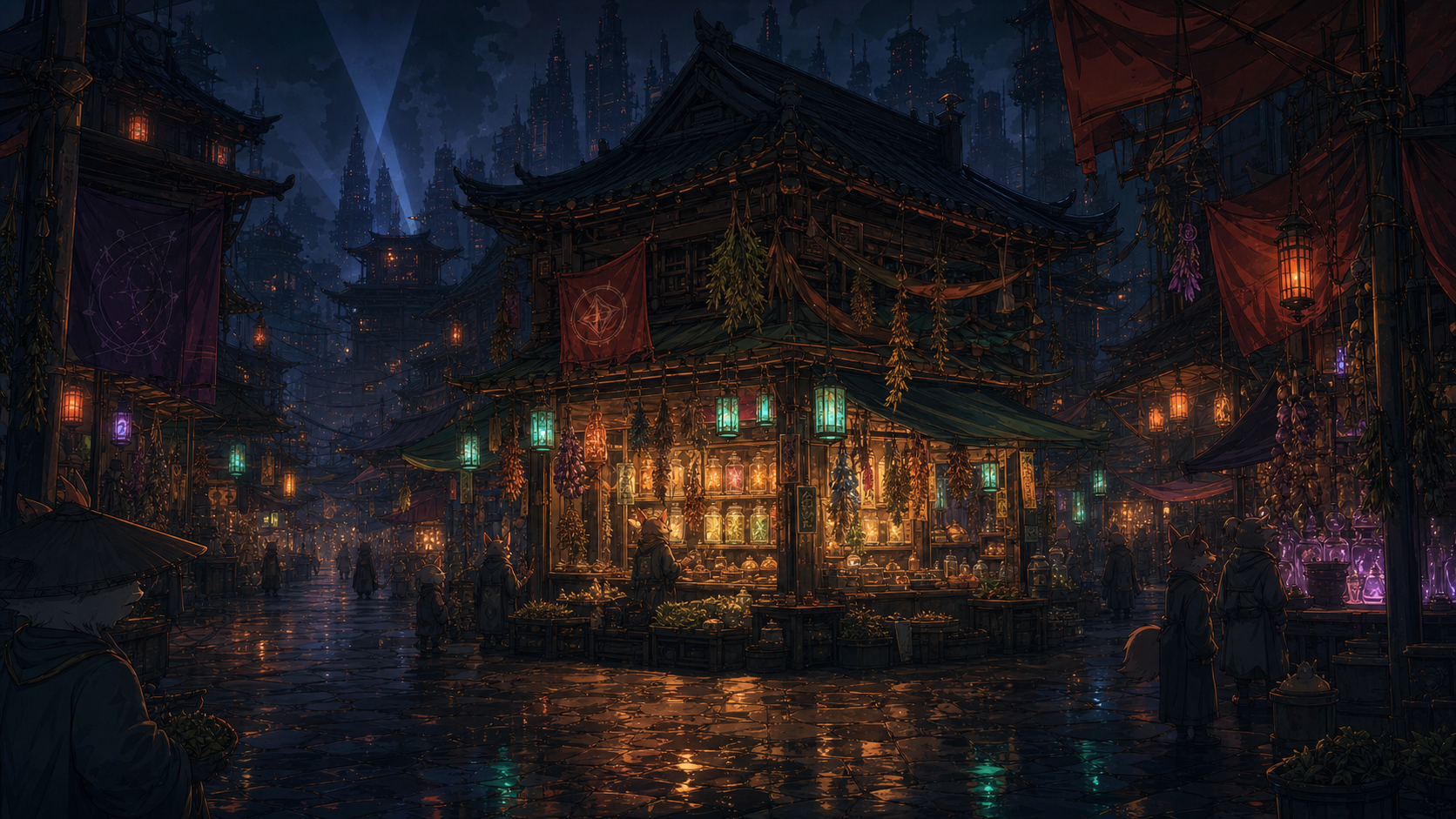
The food culture of Animalia is the sum of the eating customs peculiar to a metropolis where predator and prey share the same streets. "The table of Animalia is a peace older than the Accord" — among the city's oldest sayings, referring to the fact that the food stalls were places of truce ("no one attacks a diner") long before the Five-Family Accord 〔theories vary〕. In a three-shift city (→ TMA-Daily-Life), "breakfast time" comes three times a day — at dawn, at dusk, and in between — and the fires of the kitchens never truly go out.
1. The four dietary classes, and manners
The standard of the restaurant trade is a four-way classification: the three great diets — carnivore, herbivore, insectivore — plus the omnivore (Animalia Restaurateurs' Guild, Rating Code, AE 118 edition).
- The courtesy plate: an odor-free preparation served to companions of another diet; the mark of a first-class house (→ TMA-Daily-Life). Of the courtesy plate at Predators' Paradise it is said that "not only the smell but the sound has been removed" 〔citation needed〕.
- The first rule of manners: "Never praise your own staple in front of another diner." It suggests predation.
- Invitations state the menu. This is not etiquette; it is a safety check (→ TMA-Daily-Life).
- Shared-pot protocol: at communal pots such as the Hundred-House Hotpot, the old form is "smallest mouths dip first." The prevailing theory is practical: if the large go first, the pot is empty in one round.
- School lunches run on the dual-menu system — the herbivore "Green Line" and the carnivore "Red Line" (→ TMA-Education).
2. An illustrated register of famous dishes
Editors' note: prices are AE 120 figures (→ TMA-Economy-AMT). The average citizen's wage in plain labor is put at 2,000–3,000 AMT a month 〔citation needed〕.
| Dish | District | Price | Notes |
|---|---|---|---|
| Daybreak Porridge (three kinds) | Neon Crossroads, morning market | 3 AMT | Greens porridge (herbivore), broth porridge (carnivore), with skewered grubs (insectivore). Predator and prey slurp on the same bench (→ TMA-City-Guide) |
| Hundred-House Hotpot | Chinatown, by Starfrost Market | 5 AMT a bowl | Dozens of stalls pool their ingredients in one great pot. "Don't count the dragon's whiskers on your first visit. Eat. It's good." |
| Belltower Stufato | Vecchio | 40 AMT | A stew simmered for the space of three tollings of the bell (about three hours). The centerpiece of Vecchio's famous long dinner; one orders first and sits down after |
| Full-Moon Dumplings | Tsukimi-chō, fair nights | 2 AMT | The famous dumpling of the full-moon fair. Folk belief reads next month's economy in how fast they sell out 〔citation needed〕 |
| The Ice-House Aging Racks | Frost Harbor | market price | Meat and fish aged in a corner of the Gray Ice warehouses. The grade of grades is the "three-winter" stock |
| Fire-Eater's Hotpot | The Jungle Ward | 8 AMT | The spiciest pot in the city. Those who finish it may leave a claw-mark on the stall's pillar |
| Sunlit Platter (Hinata-meshi) | Savanna Square | 12 AMT | A great open-air sharing dish; closing a deal ends with everyone around one platter. "Sunlit talk belongs in the sunlight," served |
| Evening-Market Skewers | The Desert Ward | 2 AMT each | Grilled skewers of the after-dark market; the classic take-away for Stargazers' Hill (→ TMA-Nature) |
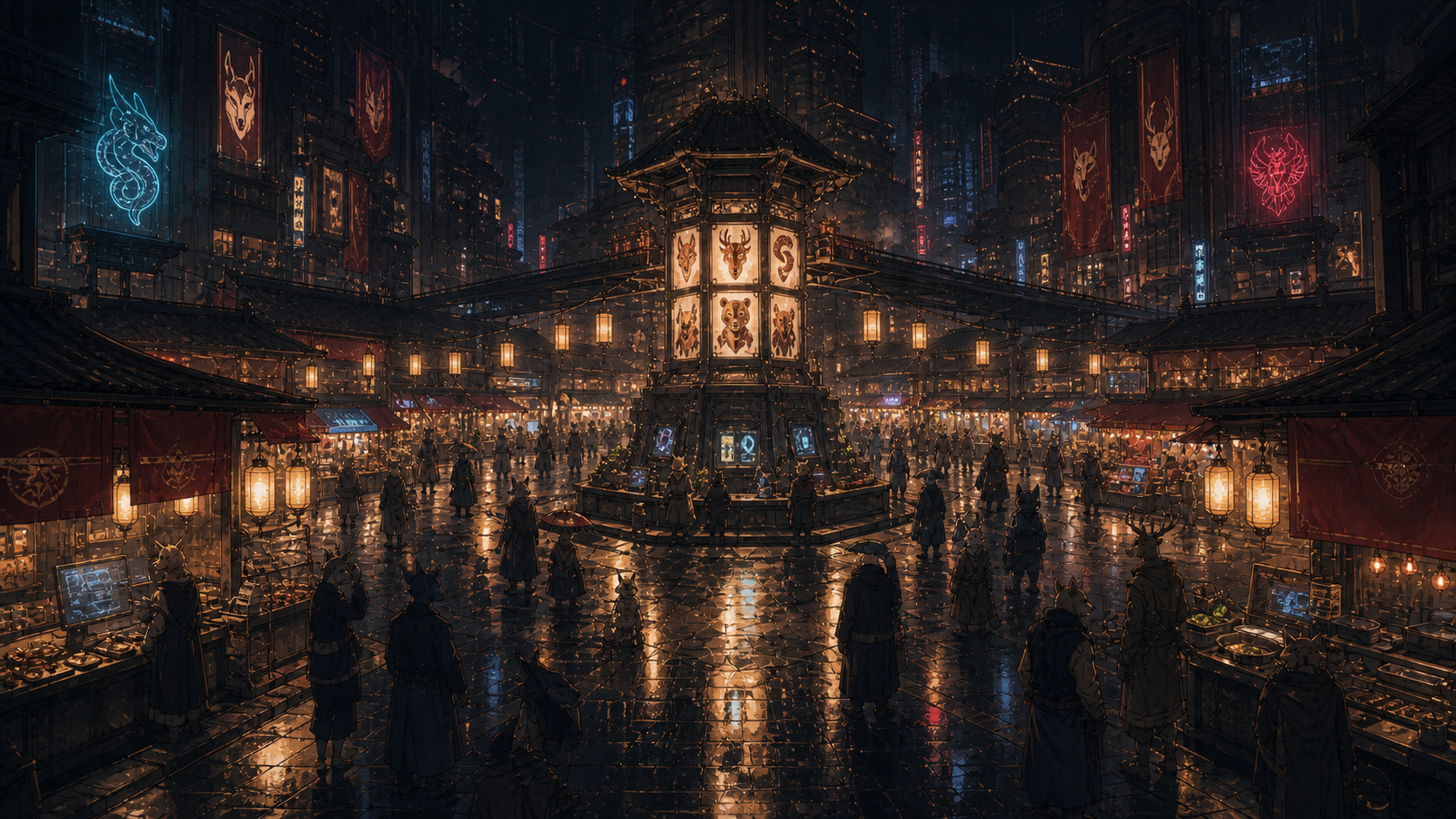
3. The Paw-Print Guide — how restaurants are ranked
The Paw-Print Guide is the annual rating booklet of the TMA Times food desk (first issued AE 84 〔citation needed〕; → TMA-Media). The identity of its masked inspectors has never once been discovered, and guessing who they are has itself become a side-bet of the restaurant trade.
| Rating | Meaning |
|---|---|
| One paw | Worth returning to |
| Two paws | Worth the queue |
| Three paws | Put it in your will |
- There are currently seven three-paw houses in the city 〔citation needed〕. Predators' Paradise keeps its third paw on the strength of its courtesy plate.
- The Daybreak Porridge stall is the only perennial candidate that declines listing, year after year. Its master: "My stools are too hard for customers who count stars."
- The treatment of Kyōgetsu-rō rekindles the "is tea a cuisine?" dispute annually. The neutrality of this section is disputed.
4. Drink and tea
- Wine and Vecchio: the First Migration Wave (AE 3) was a company of wine merchants and artisans (→ TMA-History-Rosso). Vecchio's cellar row is called "the singing cellars" — opera scales are practiced among the barrels, the humidity and acoustics being ideal.
- The toast: "The first glass gives a drop to the floor" — poured first for those who did not come back. Held to share a root with the shadow-tray rite of Zennin-ji (→ TMA-Religion).
- Jumbo Liquors & Co.: every convenience-store bottle in town passes through its warehouse (→ TMA-Daily-Life). Its flagship spirit is "Jumbo's Number Eight." What became of Numbers One through Seven, no one will say 〔citation needed〕.
- The Wolfpack Bar: the one place in Tundra territory "where warmth is permitted" (→ TMA-History-Tundra). The toast to the nameless dead is drunk without a word.
- Tea: at Kyōgetsu-rō the gossip costs more than the tea (→ TMA-City-Guide). Starfrost Market sells medicinal teas by weight, where "the worse it tastes, the better it works" passes for advertising.
- The moon and the bottle: on full moons, celebration wine flows under the proverb "a full-moon contract cannot be broken" (→ TMA-Religion). On new moons — the Silence of the Oracle — the taverns are at their quietest.
5. Everyday eating — convenience stores, stalls, delivery

- The shelves of Nocturne Mart turn over every eight hours to match the incoming shift (→ TMA-Daily-Life): boxed lunches and greens for the diurnal hours, porridge and soup at twilight, grills and chilled raw fare for the nocturnal shift. "Read the shelves and you know the hour" is every citizen's experience.
- Delivery: daytime deliveries into nocturnal quarters require silenced footwear under the Quiet Ordinance (AE 67) (→ TMA-Daily-Life).
- Stall signals: a customer who leaves without scraping the stool is "a customer in a hurry to vanish"; the master puts the bill on the month-end slate and lets them go — so the unwritten rule is said to run 〔citation needed〕.
- On why brawls almost never happen at the stalls, folklorists cite the internalized truce; the stall masters' own explanation is shorter — "their mouths are full" (Proceedings of the Animalia Folklore Society, AE 117).